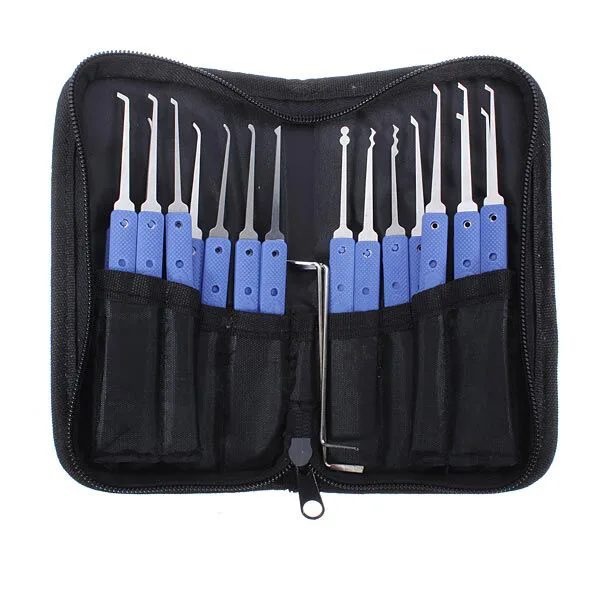
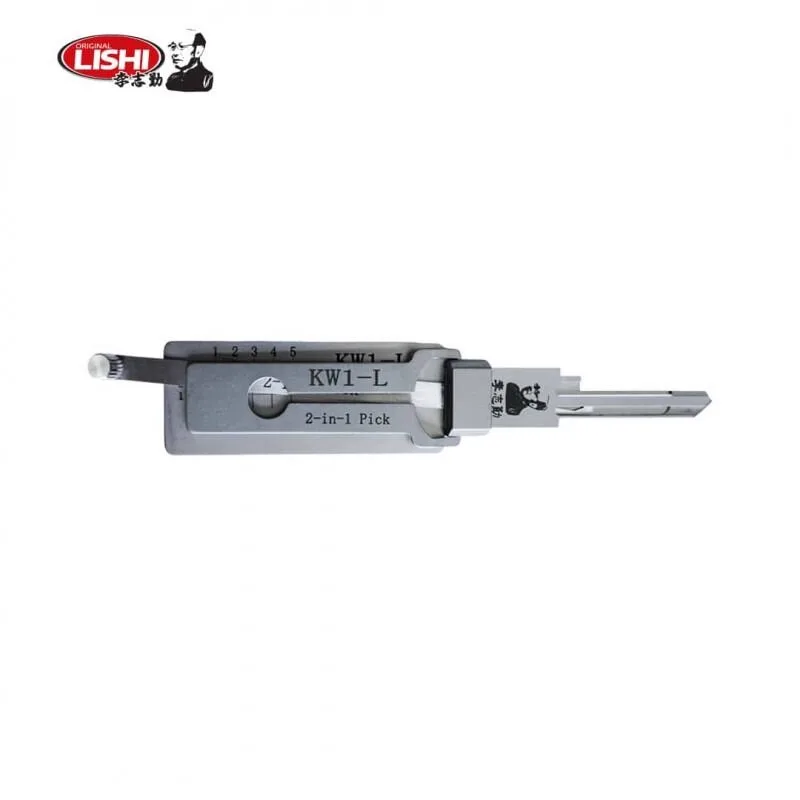
A Lishi 2-in-1 is one tool that does two jobs on a single keyway: it opens the lock and then reads the cut depths so you can make a working key. For a locksmith that means no drilling and no lock replacement; for a distributor it means a product line where every SKU is tied to a keyway code — so stocking the right codes for your market matters more than stocking many.
What a 2-in-1 tool actually does
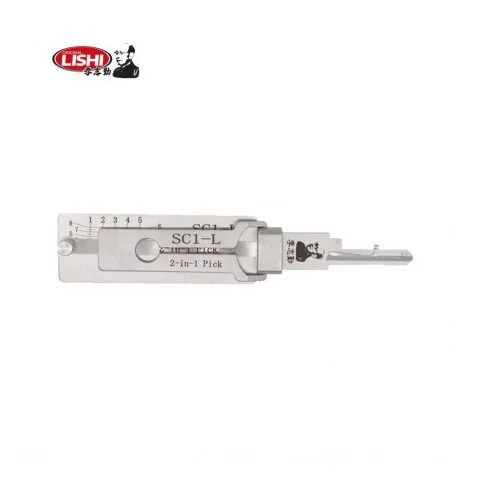
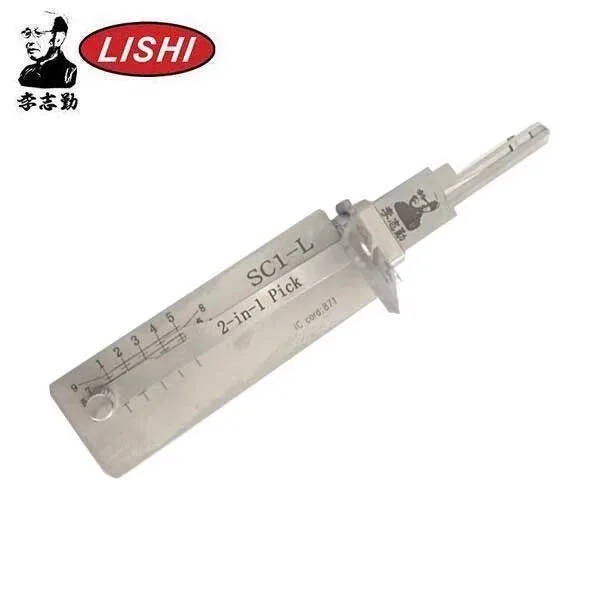
Each tool is made for one keyway profile. It has a tension arm that sits in the keyway and a lifter that sets each pin or wafer position in turn. The positions are marked on the tool, so the user always knows which pin they are working on.
After the lock is open, the same tool becomes a decoder: the user reads the depth of every position from the engraved scale and turns it into a cut code. That code goes to a key machine, and the customer gets a new working key without changing the lock.
That is why these tools sell to automotive and residential locksmiths rather than hobbyists: the value is the key at the end of the job, not just the opening.
How keyway codes work
The code on each tool names the keyway (and often the pin count) it fits. A few examples from our range:
| Code | Fits |
|---|---|
| KW1 | Kwikset, 5-pin |
| SC1 | Schlage, 5-pin |
| SC4 / KW5 | Schlage and Kwikset 6-pin versions |
| S123 / C123 | Schlage Everest keyways |
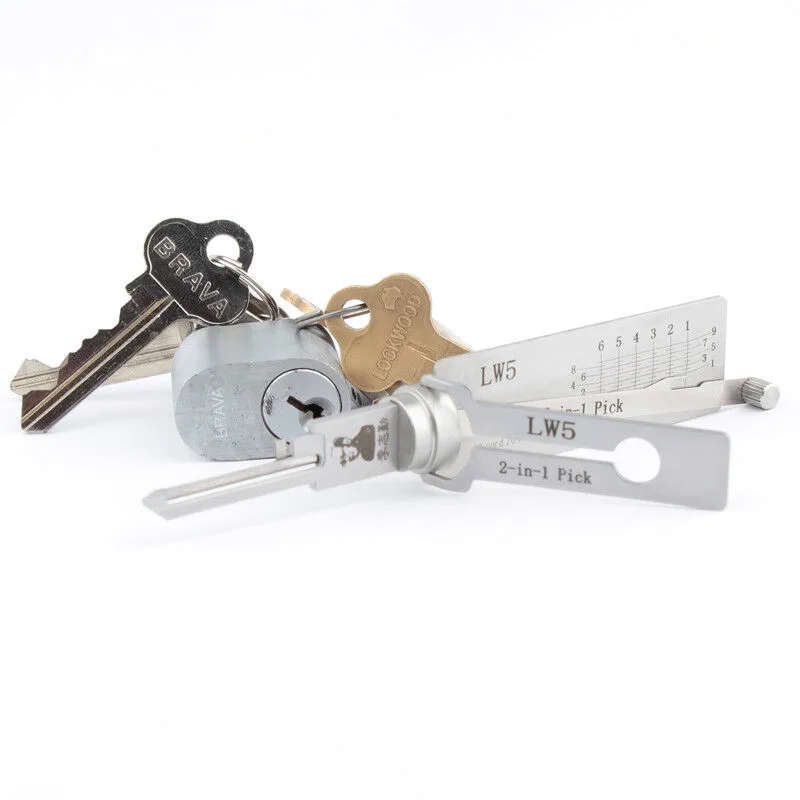
| LW4 / LW5 | Lockwood, 5- and 6-pin |
| AM5 | American padlocks |
A tool only works on its own code, so a 5-pin tool will not decode a 6-pin cylinder of the same brand. If a customer is not sure which code they need, the simplest check is the key blank: send us a photo of the key or blank and we match it to a model. The Lock Type Finder lists every model by keyway.
Which codes to stock by market
- United States and Canada: Kwikset and Schlage codes move first — KW1, SC1, and the 6-pin KW5 / SC4. Add S123 / C123 if your customers service Schlage Everest.
- Australia: Lockwood is the local name to know, so LW4 / LW5 belong in any Australian starter range next to the US codes used on imported hardware.
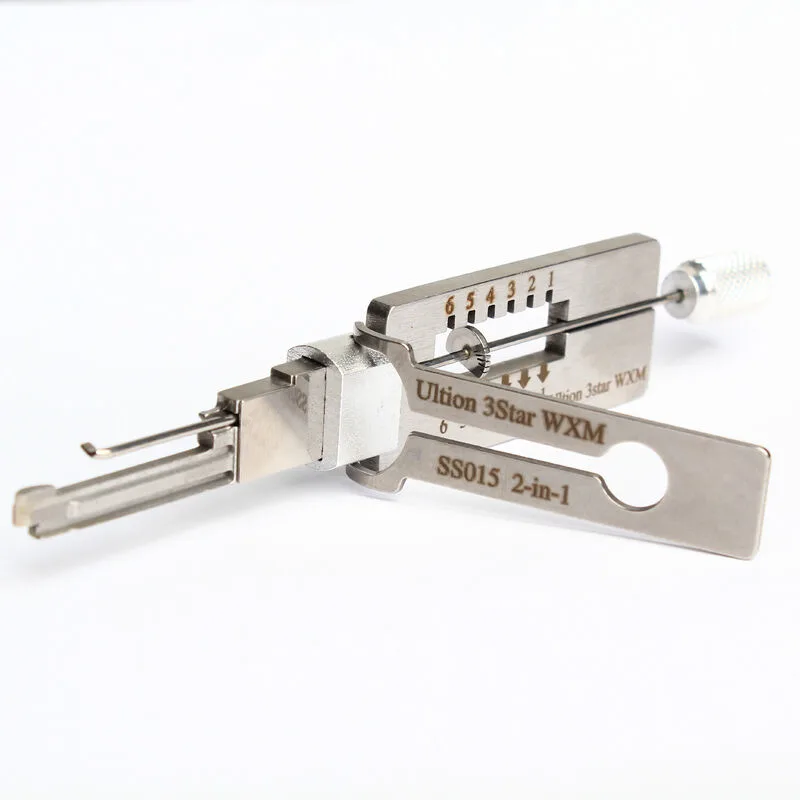
- United Kingdom and Europe: euro cylinders dominate. Our 2-in-1 picks for Ultion, 3-Star, WXM, R6, T60 and R55 cylinders cover several common UK profiles.
Start with the 3–5 codes your customers ask for most, then add codes when they ask. Because in-stock tools have no minimum order, you can test several codes in a small first order instead of buying deep on one.
Buying notes for distributors
- Your logo: laser marking on the tool and printed cases are available from 100 pcs.
- Samples first: samples are free (you pay the express freight), so you can check the finish and the engraving before ordering.
- Training: buyers new to 2-in-1 tools learn faster with a practice cylinder of the same keyway — consider bundling.
Quality checks before you list them
Two tools with the same code can feel very different in use. When you compare samples, check:
- Engraving — position numbers and the depth scale must be sharp and easy to read; blurred marks make decoding unreliable.
- Lifter movement — smooth, with no wobble side to side.
- Fit in the keyway — the tension arm should sit firmly without forcing.
- Finish and packaging — no burrs on the edges, and a case or card that names the code clearly, because buyers search by code.
Mistakes resellers make with 2-in-1 tools
- Mixing up 5-pin and 6-pin codes in listings — the most common reason for returns. Put the pin count in the product title.
- Stocking too many codes at once. A long tail of slow codes ties up cash; add codes as customers ask.
- Selling the tool without the follow-up. Locksmiths who decode also cut keys, so key cutters and key machine accessories sell well alongside.
- Ignoring who the buyer is. These are professional tools; many sellers limit them to trade customers and add a professional-use note to listings.
Key terms
| Keyway | The profile of the key slot; each 2-in-1 tool is made for one keyway. |
|---|---|
| Pin count | How many pin or wafer positions the lock has — 5-pin and 6-pin versions need different tools. |
| Tension arm | The part of the tool that sits in the keyway and applies turning pressure. |
| Lifter | The small blade that sets each position in turn. |
| Decoding | Reading the depth of each position from the engraved scale after the lock is open. |
| Cut code | The depth numbers a key machine uses to cut a new key. |
Questions
Does one Lishi tool fit all Kwikset or Schlage locks?
No. Each tool fits one keyway and pin count, for example KW1 (Kwikset 5-pin) or KW5 (Kwikset 6-pin). Check the key blank or ask us to match it.
Can I mix different Lishi codes in one order?
Yes. In-stock tools have no minimum order, so you can mix codes and other tools freely.
Can you put our logo on 2-in-1 tools?
Laser marking on the tool and printed cases are available from 100 pcs. Send your logo and we confirm the marking area per model.